
The scenario
A service business turning over well past $1m comes to us with a HubSpot account. Inside are 11,000 contacts: past clients, old enquiries, quotes that never went ahead, and people met at expos years ago.
Nobody has emailed them since 2021.
Most businesses respond in one of two ways. They leave the list alone, which wastes something they’ve already paid for. Or they send one big “We’re still here!” email to all 11,000 and damage their sender reputation in an afternoon.
There’s a better way. Here’s how we’d turn a dormant database into pipeline, in four steps.
1. Clean and verify
Don’t send anything yet. Run the list through an email verification tool, merge duplicates, and suppress hard bounces and anyone who has unsubscribed.
A list this old usually shrinks noticeably, and that’s a good thing. Fewer real people beat a big list full of dead addresses.
Watch this video to learn more about domain authority
2. Segment by value
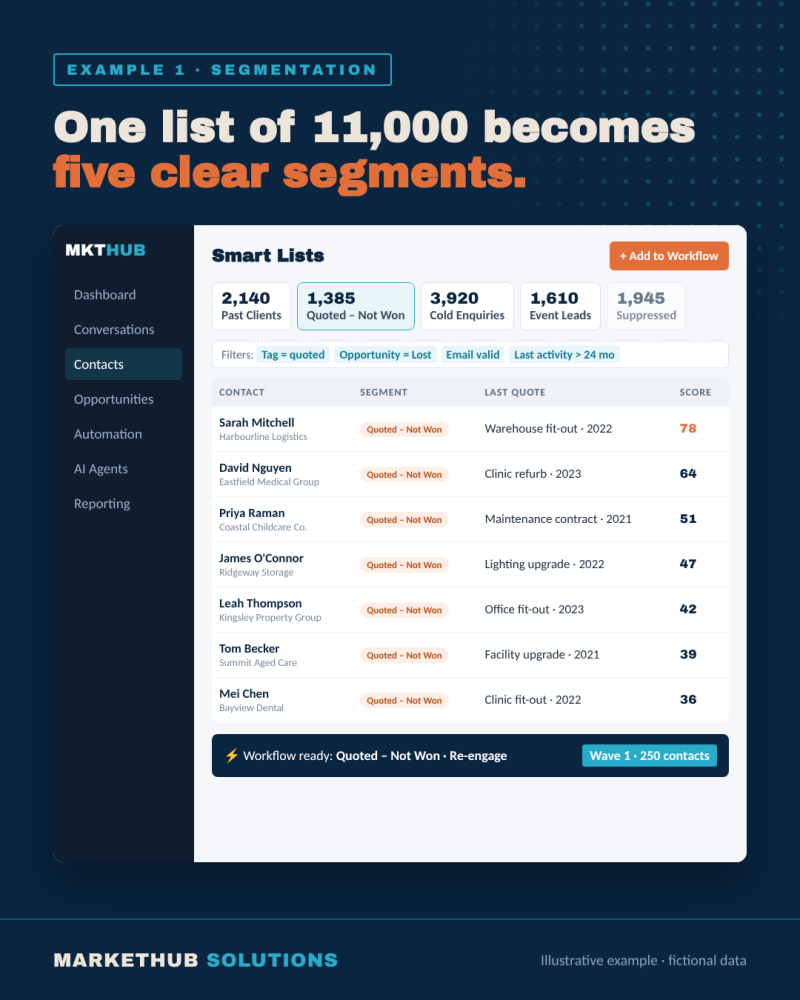
One list of 11,000 should become several smaller audiences, each with its own story. Using lifecycle stages, deal history and custom properties in your CRM, split contacts into groups like these:
- Past clients, who already know and trust you
- Quoted but not won, who were close once and are often the quickest wins
- Cold enquiries, who raised their hand but never went further
- Event and expo leads, who met you but never really engaged
- Suppressed, who are invalid, unsubscribed or not worth emailing
A past client and a cold expo lead should never get the same email.
3. Re-engage in waves
Send in small batches, starting with your warmest segment, so you can watch deliverability and refine the message before you scale up.
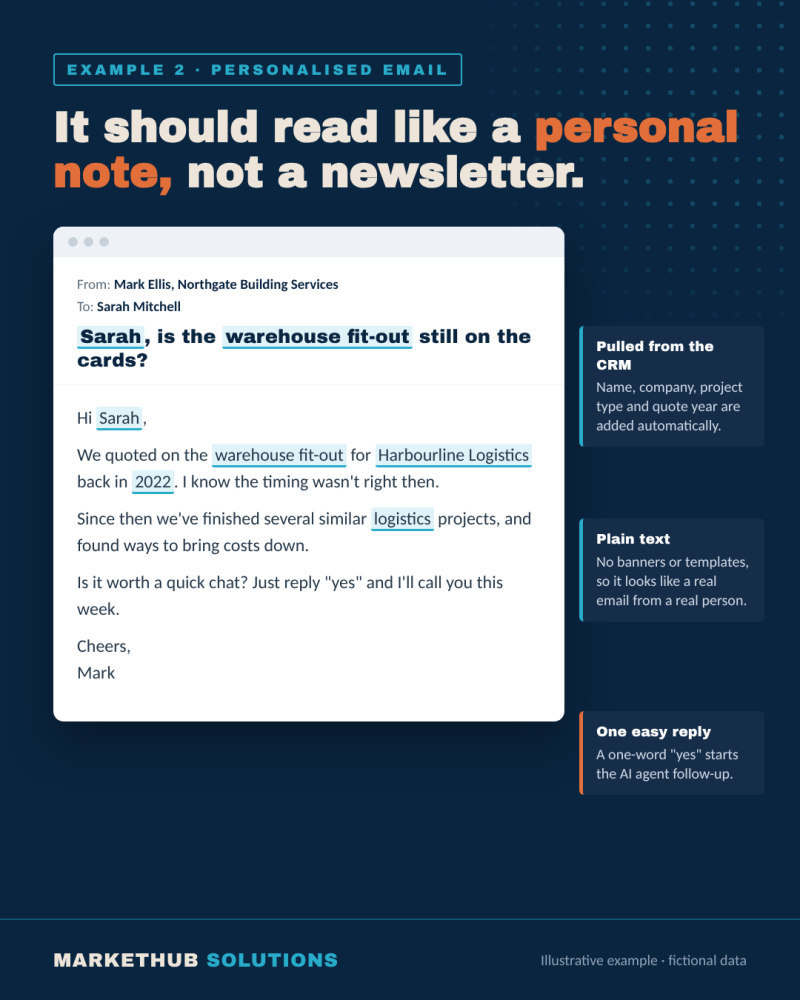
Write like a person, not a newsletter: plain text, short, and personalised with what the CRM already knows (name, company, project type, when you last quoted). Give people one easy reason to reply, such as “Is this still on your radar?”
4. Let AI agents triage 24/7
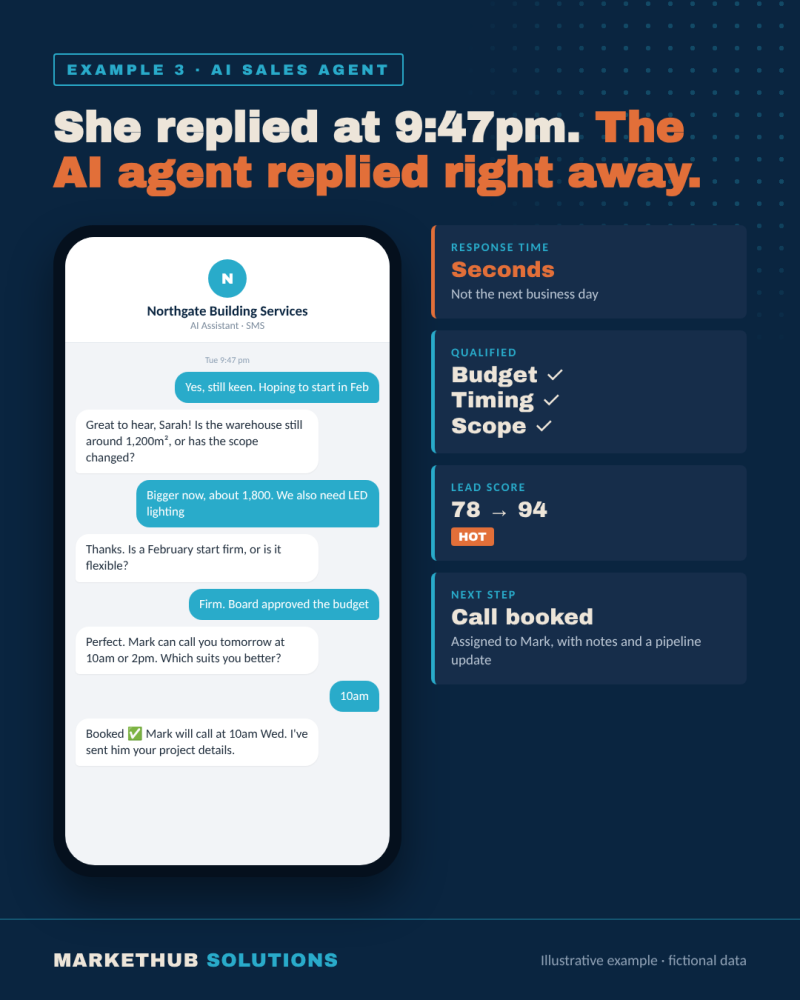
This is where most re-engagement campaigns fail. Someone replies at 9:47pm, the email sits until the next morning (or the next week), and by the time sales calls, the interest has gone.
AI sales agents fix this. Built into your CRM, they can:
- Reply by SMS in seconds, at any time of day
- Qualify the lead by asking about budget, timing and scope in a natural conversation
- Make or answer phone calls with an AI voice agent that handles first-touch conversations and books appointments
- Update lead scores and the pipeline automatically as answers come in
- Book the meeting straight into your team’s calendar, with a full summary attached
- Hand over to a human as soon as a lead is hot, so your salespeople spend time only on qualified opportunities
Behind the scenes, workflows branch on opens, clicks and replies, lead scoring sorts warm contacts from cold, and a sunset rule cleans out anyone still silent after the sequence. The AI triages leads faster than any human can, and your team steps in when it counts.
The bottom line
Those 11,000 contacts cost you time, ad spend and event fees to collect. Re-engaging them is almost always cheaper than finding new leads, and with AI agents doing the first triage, no warm lead waits until Monday.
A CRM shouldn’t be a digital filing cabinet. It should be one of your hardest-working team members.
If your CRM has gone quiet, let’s talk. MarketHub Solutions helps established service businesses audit, segment and automate their databases, from clean-up to AI agents. Book a CRM health check at markethubsolutions.com.au or book a call here.
First published in B2B Bottlenecks, Tina's LinkedIn newsletter, on 26 October 2026.
